Puzzles are an entertaining hobby, that is ideal for pleasure and is suitable for the head! They build reasoning and logical skills of a person, that can also be applied in academics. Solving a puzzle, is like solving a problem for your assignment at school. It helps you solve problems in your math class, or to form a conclusion in your science class. If you want to know more about the benefits of doing a puzzle, read more here. Sometimes, solving one can be very frustrating. Here are some of the tricks you can use when solving a puzzle:
Do It Picture-Side-Up
The first thing to do if the jigsaw puzzle is given and the side of the image is facing downwards, it would be good to turn each piece picture-side-up. This tip may sound boring to you, but believe me, it will probably make it easier for you to put the puzzle together! You can relate this tip with collecting the facts and information you might need if you are solving a problem at a class.
Group the Pieces
While you are turning the pieces upside, it is better that you sort it at the same time. All the pieces that fit on edge and the middle have to be put in a separate pile. So when you start doing the puzzle, you know which collection to get when you are making the edges. Grouping the pieces is like compiling the data you have with the same use.
Start Assembling the Border
You must start building the puzzle after you have the pieces sorted out. It is best to start with the border as defined. And if you are missing parts of the jigsaw puzzle, don’t worry. They will appear later when you are working on the other section. When you are solving a problem, of course, you start at the first. Where the problem begins, until other data fills in and complete your answer.
Assemble by Groups, Colors, and Patterns
After you are done with the border, start doing the middle section. Let’s protect ourselves from frustration and renunciation by starting with the easy parts. In the case of the mountain scene, the puzzle’s easy part is likely the house or the ground. You need to start with the easy ones to prepare for the hard parts of the problem.
Pay Awareness to Piece Shapes
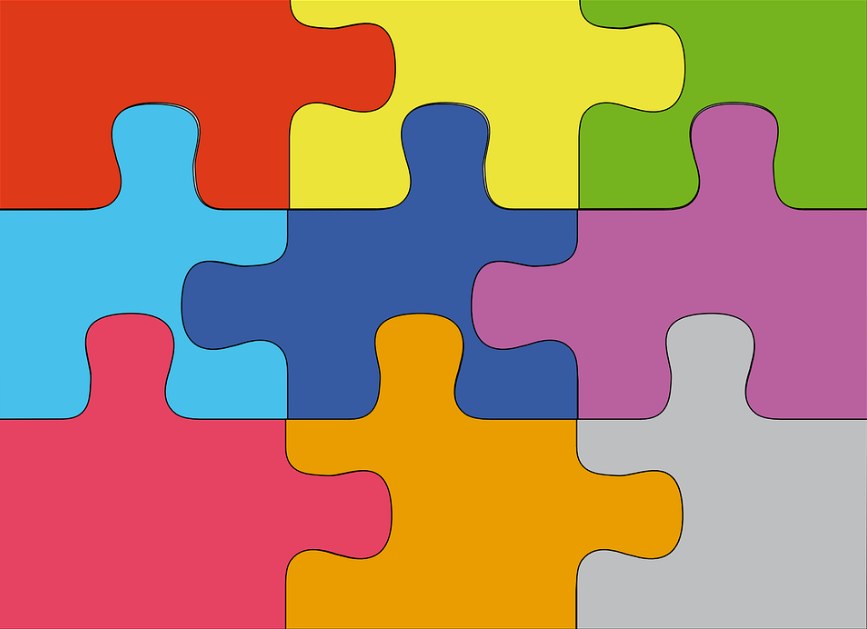
Another thing is the nature of the piece. The puzzle pieces come in six standard shapes. Whatever you like, the more experience you have, the sooner you can take a look to see if a piece has the smallest chance to fit the part. You need to know which data matches the problem you are solving to do it precisely.